

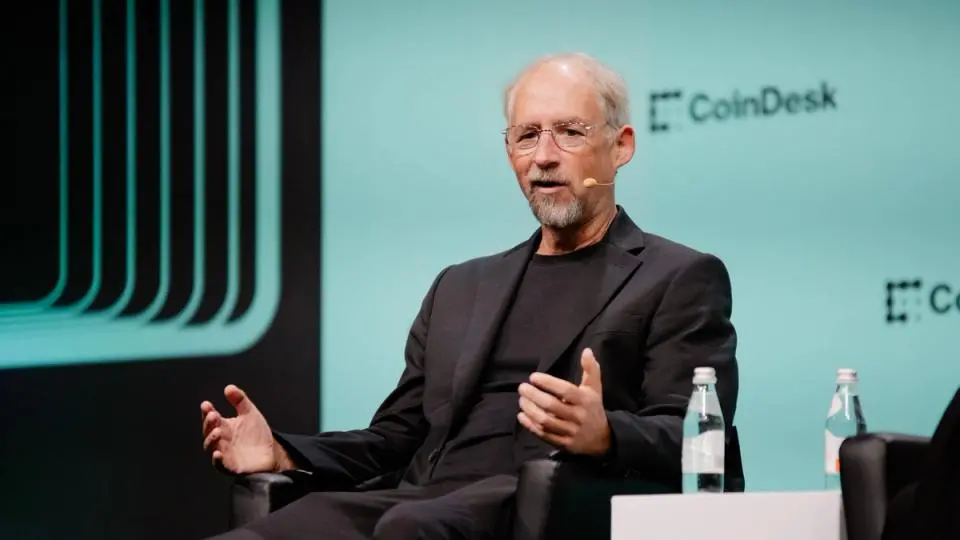
Speaking at Consensus Miami 2026, Blockstream CEO Adam Back made a compelling case for Bitcoin's role as the ultimate safe haven in the decentralized finance landscape. In a talk titled 'Safety First,' Back argued that Bitcoin's minimalist design philosophy is winning the ongoing 'DeFi security war' by attracting institutional investors who are increasingly wary of the vulnerabilities plaguing smart contract platforms.
The backdrop: DeFi's security crisis
The decentralized finance ecosystem has grown exponentially since 2020, but this growth has been accompanied by a surge in high-profile exploits. According to data from Rekt News, over $3 billion has been lost to DeFi hacks in 2025 alone, with cross-chain bridges and complex smart contract protocols being the most targeted. Incidents such as the $600 million Ronin bridge hack and the $320 million Wormhole exploit have highlighted the inherent risks of composability and code complexity. These attacks have not only drained user funds but have also shaken confidence in the ability of decentralized platforms to secure assets at scale.
Adam Back, a renowned cryptographer and cypherpunk, has long championed Bitcoin's conservative approach. As the co-inventor of Hashcash, the proof-of-work algorithm that underpins Bitcoin mining, Back has been a foundational figure in the development of digital currency. His company, Blockstream, has been at the forefront of Bitcoin scalability solutions, including the Lightning Network and sidechains like Liquid. At Consensus, Back emphasized that Bitcoin's security model is not accidental—it is the result of a deliberate design philosophy that prioritizes simplicity, finality, and attack resistance over experimental features.
Why Bitcoin's design is inherently more secure
Back contrasted Bitcoin's architecture with that of Ethereum and other smart contract platforms. Bitcoin uses a UTXO (unspent transaction output) model, which makes transactions deterministic and easier to verify. In contrast, Ethereum's account-based model, combined with a Turing-complete smart contract language, introduces a vast attack surface. 'Every contract is a potential vulnerability,' Back stated. 'Bitcoin's script is deliberately limited to prevent exploits. We don't need Turing completeness to transfer value. We need reliability.'
This reliability is further reinforced by Bitcoin's decentralized mining network, which has become the most secure computing network in the world. With a hash rate exceeding 600 exahashes per second, the cost of attacking Bitcoin is astronomically high, making it economically unfeasible. Back pointed out that DeFi protocols built on Ethereum, even those using Layer-2 solutions, ultimately rely on the security of the underlying base layer. However, the complexity of Ethereum's state machine introduces risks that cannot be fully mitigated by Layer-1 security alone. 'Bitcoin's security is not just about hash power; it's about consensus simplicity. We don't have smart contract risks because we intentionally don't have smart contracts in the traditional sense.'
Institutional preference for Bitcoin
The implications of this security philosophy are becoming increasingly clear in the institutional world. Pension funds, sovereign wealth funds, and corporate treasuries are beginning to allocate capital to digital assets, and they are overwhelmingly choosing Bitcoin over DeFi tokens. Back cited recent moves by the Government Pension Investment Fund of Japan and the Norwegian Sovereign Wealth Fund, which have disclosed Bitcoin exposure through indirect investments. These entities are not interested in yield farming or liquidity mining; they seek a store of value that can withstand regulatory scrutiny and technical failures.
'Sovereigns and pension funds have a fiduciary duty to protect capital,' Back explained. 'They cannot afford to explain to their stakeholders that funds were lost in a smart contract hack. Bitcoin offers a simple, auditable asset that has a 15-year track record of uninterrupted operation.' This preference is also reflected in the growth of Bitcoin-focused exchange-traded products, which have seen net inflows exceeding $20 billion in 2026, while most Ethereum-based DeFi tokens have struggled to maintain investor interest.
Layer-2 solutions: Bringing DeFi to Bitcoin without sacrificing security
Despite Bitcoin's conservative design, Back envisions a future where decentralized finance can exist on top of Bitcoin through Layer-2 systems. Blockstream's Liquid sidechain already facilitates tokenized assets, including stablecoins and security tokens, with a focus on speed and confidentiality. The Lightning Network, which now has over 15,000 nodes and capacity exceeding 5,000 BTC, enables instant and low-cost payments, effectively serving as a payment-layer DeFi solution.
Back also highlighted emerging projects like RGB and Taproot Assets, which aim to bring smart contract capabilities to Bitcoin without altering its base layer. These systems use client-side validation and single-use seals to create tokens and execute programmable logic, all while inheriting Bitcoin's security. 'We can have DeFi on Bitcoin—but it has to be done right,' Back emphasized. 'No rehypothecation, no composability risks, no complex state machines. Just simple, secure tokenization with Bitcoin as the anchor.'
This approach is gaining traction. Several centralized exchanges and financial institutions are exploring Bitcoin Layer-2 solutions for tokenizing real-world assets such as real estate, commodities, and equities. The total value locked in Bitcoin-based DeFi protocols has grown from less than $100 million in 2023 to over $1.5 billion in early 2026, indicating that investors are beginning to see the potential of a security-first DeFi ecosystem.
The next wave of adoption
Looking ahead, Back predicted that the next major adoption wave will come from institutional portfolio allocations, sovereign entities, and pension funds gaining direct exposure to Bitcoin. This is already happening: in the first quarter of 2026, several European pension funds announced plans to allocate up to 5% of their assets to Bitcoin, citing its strong risk-adjusted returns and uncorrelated nature relative to traditional asset classes.
Back also noted that the regulatory landscape is shifting in favor of Bitcoin. The recent passage of the CLARITY Act in the U.S. Senate committee, which aims to provide clear guidelines for digital asset classification, is seen as a positive step for institutional involvement. While the bill includes provisions for other cryptocurrencies, its emphasis on consumer protection and market stability aligns with Bitcoin's established reputation.
However, Back cautioned that the industry must remain vigilant. 'Security is not a one-time achievement; it's a continuous process. We cannot become complacent just because Bitcoin hasn't been hacked. The threat landscape evolves, and so must our defenses.' He pointed to ongoing research in quantum resistance and the development of new cryptographic techniques, such as Schnorr signatures and MuSig, which are being implemented through soft forks like Taproot. These upgrades enhance privacy and efficiency while maintaining Bitcoin's core security properties.
Career highlights and broader impact
Adam Back's contributions to the cryptocurrency space extend far beyond his work at Blockstream. He was an early member of the cypherpunk mailing list and engaged in discussions with Satoshi Nakamoto during Bitcoin's formative years. His invention of Hashcash in 1997 provided the proof-of-work mechanism that Nakamoto later adapted for Bitcoin. Back has also been a vocal advocate for financial privacy and censorship resistance, participating in the development of the Bitcoin protocol and contributing to the design of the Lightning Network.
In 2024, Back published a paper titled 'Bitcoin as a Security Network,' which argued that Bitcoin's primary value proposition is not just as a currency but as a secure settlement layer for the future global financial system. This vision is now being realized as institutions recognize that Bitcoin's simplicity is a feature, not a bug. The 'DeFi security war' is not just about which platform can offer the most complex financial products; it is about which platform can be trusted to safeguard value over decades.
Back's speech at Consensus Miami 2026 resonated with many attendees who have grown weary of the constant cycle of exploits and market manipulation in the wider DeFi space. As one audience member noted, 'We've spent years chasing yield and ended up losing principal. Bitcoin reminds us that security is the ultimate foundation.'
The future of finance may well be tokenized, but if Adam Back's vision holds, that tokenization will increasingly rest on the rock-solid foundation of Bitcoin—a system designed from the ground up to survive any storm.
Source: Coindesk News