

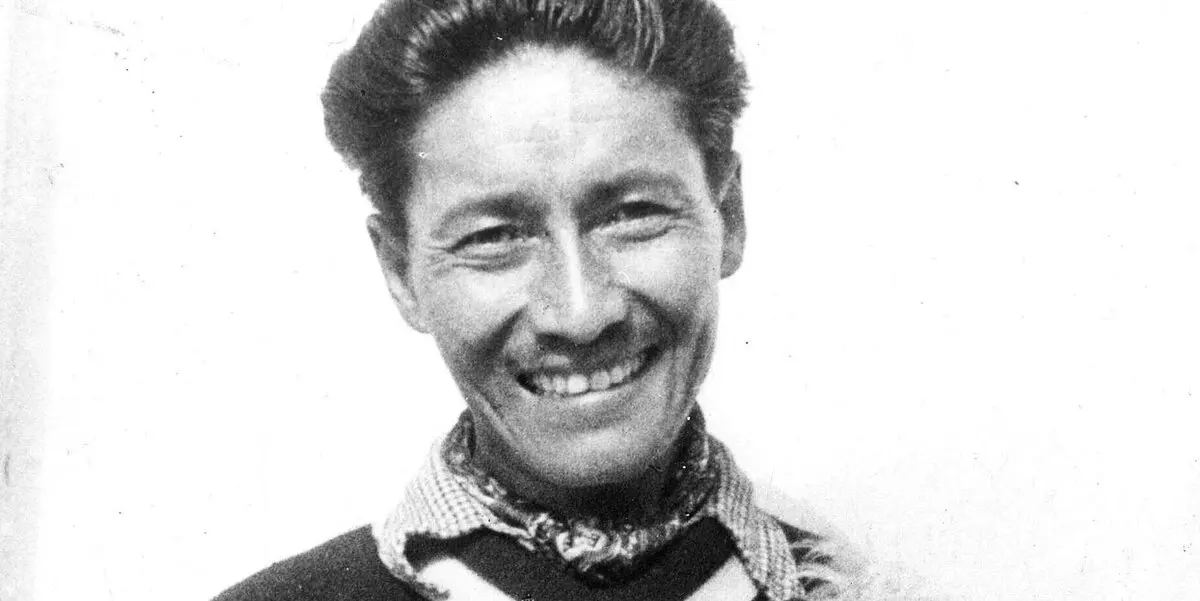
Seventy years ago, on May 29, 1953, two men reached the summit of Mount Everest, the highest point on Earth at 8,848 meters (29,029 feet). One was a tall New Zealand beekeeper named Edmund Hillary; the other was a small Nepalese Sherpa mountaineer named Tenzing Norgay. Their achievement was hailed as a triumph of human endurance and exploration, but from the very beginning, the credit was unevenly distributed. In the West, the narrative often reads “Hillary and his Sherpa,” while in the Himalayan region, Tenzing is revered as the true conqueror. This article delves into the story behind the summit—the colonial legacy, the hardships faced by Sherpas, and the enduring fight for recognition.
The Unlikely Duo
Tenzing Norgay was born in 1914 in Tibet, though he grew up in the Khumbu region of Nepal. From a young age, he was drawn to the mountains. He first joined a British Everest expedition in 1935 as a porter, carrying heavy loads at altitudes that would cripple most outsiders. Over the next two decades, he participated in six more attempts on Everest, gaining unmatched experience. By 1953, he was the most accomplished climber on the team, hired as a sirdar—a leader of the porters. Hillary, by contrast, was a relative newcomer to high-altitude mountaineering, though he had proven himself on previous expeditions in New Zealand and the Himalayas.
The initial team selected for the summit push was Tom Bourdillon and Charles Evans, both British. But after reaching the South Summit, they turned back, exhausted. The second pair, Tenzing and Hillary, was given the go-ahead. It was Hillary who had insisted on Tenzing as his partner, despite snobbish resistance from members of the Himalayan Club in London. “What? A coolie climbing Everest?” they had scoffed.
A History of Exploitation and Resistance
The Sherpa people have been the backbone of Himalayan exploration for centuries. Living at high altitudes, they possess genetic adaptations that allow them to thrive in low-oxygen environments. Yet they have often been treated as second-class participants. In 1953, just before the expedition set out, the entire team was invited to the British Embassy in Kathmandu. While Western climbers slept inside the building, the Sherpas were relegated to a garage, an old stable without toilets. Tenzing protested on behalf of his men, but his complaint was dismissed. The next morning, the Sherpas urinated on the street in front of the embassy in a bold act of defiance.
This incident was not an isolated one. Sherpas had long been subjected to poor conditions, low pay, and dangerous tasks. A tragic example was the 1934 German Nanga Parbat expedition, where six Sherpas and four Germans died after the leaders ignored porters’ demands for better equipment and food. The Sherpas had gone on strike, but their grievances were suppressed. The disaster forced a change: Sherpas began organizing to demand respect and safety. Strikes became more common, leading to gradual improvements.
Tenzing himself lost a four-year-old son to contaminated water in 1939, and his first wife died after a prolonged illness in 1944—both tragedies linked to poverty and lack of access to clean water and medicine. He later wrote that climbing Everest was not just a personal ambition but a way to lift his family and his people from obscurity.
The Summit and Its Aftermath
When the news of the successful summit reached London on June 2, 1953, it coincided with the coronation of Queen Elizabeth II. The British establishment framed the achievement as a Commonwealth victory, with Hillary at its center. Tenzing was awarded the George Medal—Britain’s second-highest civilian honor—but Hillary was knighted. The disparity was stark. Tenzing, who was illiterate at the time (he later learned to read and write in several languages), was treated as a sidekick.
In Nepal and India, however, Tenzing became a national hero. He was appointed director of the Himalayan Mountaineering Institute in Darjeeling by Indian Prime Minister Jawaharlal Nehru. He also founded the Sherpa Climber’s Association in 1954 to advocate for better conditions. Yet his later years were marked by bitterness. In 1976, he was forced out of his directorship against his will, and he turned to alcohol. His grandson Tashi Tenzing later recalled that he grew “increasingly disillusioned and unhappy.” At a conference in the 1990s, when Western climbers boasted about their Himalayan exploits, two Nepalese guides erupted: “What about us? Why do you only talk about yourselves? Without the Sherpas, you would never have achieved any of this!”
The Unspoken Toll
Today, Sherpas are still risking their lives on Everest. In 2014, an avalanche killed 16 Nepalese guides who were fixing ropes for paying clients. The tragedy highlighted the ongoing inequality: wealthy foreign climbers pay tens of thousands of dollars for a summit attempt, while Sherpas often earn a few thousand to carry heavy loads and set up camps. Yet without their expertise, climbing Everest would be impossible. They are the ones who navigate the treacherous Khumbu Icefall, fix ladders across crevasses, and endure the most dangerous conditions.
Tenzing Norgay died in 1986 at age 72 in Darjeeling. His passing received little attention in European newspapers, while Hillary’s death in 2008 was widely covered. This discrepancy reflects the enduring colonial lens through which Western media views Everest history. However, in the Himalayas, Tenzing’s legacy lives on. The folk song “Hamro Tenzing Sherpa” still praises him, ending with the line: “He led Hillary over the difficult paths.” For Sherpas, he remains the true first at the top.
Remembering the Partnership
Both men remained friends for life, and Hillary always acknowledged Tenzing’s skill and experience. But the structural bias in recognition cannot be ignored. Tenzing was denied a knighthood, and his contributions were minimized. In recent years, there has been a growing awareness of this imbalance. Museums and documentaries now often highlight the Sherpas’ role. Schools in Nepal teach children that Tenzing Norgay and Edmund Hillary were a team, not a hero and his helper.
The story of the 1953 Everest ascent is not just about a mountain—it is about class, race, and the price of fame. Tenzing Norgay overcame poverty, loss, and discrimination to achieve the impossible. Yet his triumph, like that of so many Sherpas before and after him, was partly stolen by the very systems that relied on his strength. As we mark 70 years since that historic climb, it is time to fully acknowledge that without Tenzing Norgay, Hillary might never have stood on the roof of the world.
Source: taz.de News