

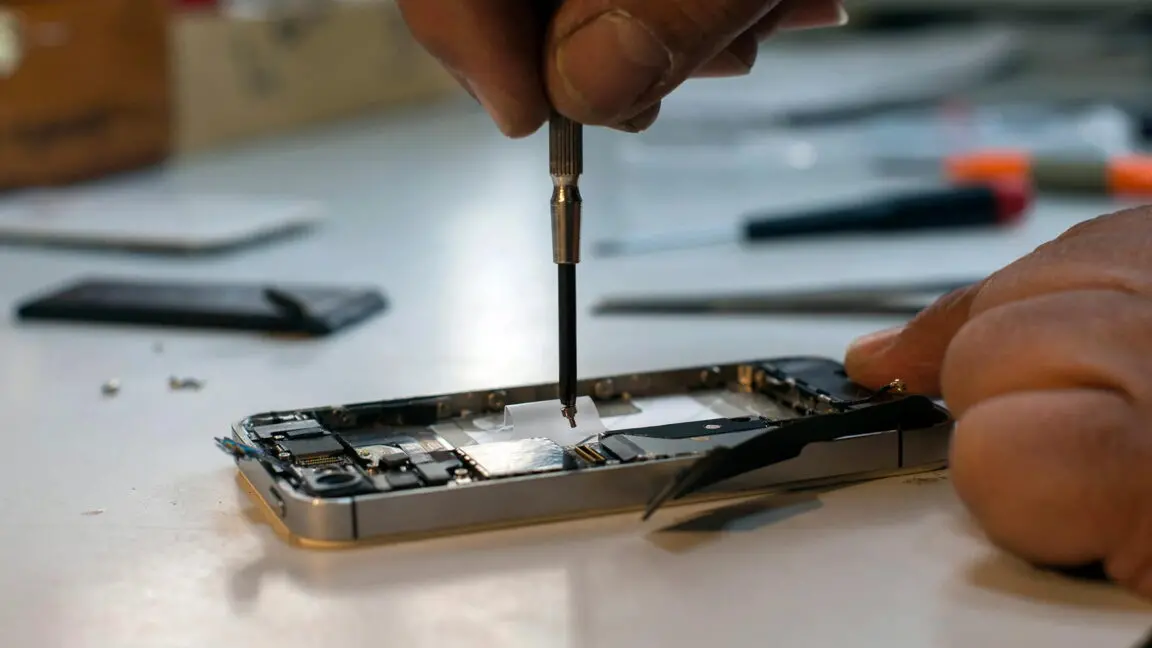
A bill that would have significantly weakened Colorado's historic right-to-repair law has been defeated in a state House committee, marking a major victory for consumer advocates and repair freedom supporters. The proposed legislation, SB26-090, aimed to create a broad exception for 'critical infrastructure,' a term critics argued could be used by tech companies to exempt almost any device from repair requirements.
The defeat came after months of lobbying and intense public hearings, culminating in a 7-to-4 vote in the Colorado House’s State, Civic, Military, and Veterans Affairs Committee. The bill is now classified as 'postponed indefinitely,' effectively killing it for this legislative session.
Background: Colorado’s Landmark Repair Law
Colorado’s Consumer Right to Repair Digital Electronic Equipment, passed in 2024 and effective January 2026, is one of the strongest repair laws in the United States. It requires manufacturers of digital electronics—such as smartphones, laptops, and Wi-Fi routers—to provide consumers and independent repair shops with the tools, parts, and documentation needed to fix their devices. The law was seen as a model for other states and a direct challenge to the dominant 'planned obsolescence' business model.
The right-to-repair movement has gained momentum globally, driven by concerns over electronic waste, consumer costs, and the monopolistic practices of tech giants. Advocates argue that proprietary restrictions force consumers to pay exorbitant fees for authorized repairs or simply discard broken devices, contributing to the world’s fastest-growing waste stream.
The Proposed Repeal: SB26-090
SB26-090 was introduced in the Colorado Senate on April 2, 2026, with backing from major technology companies including Cisco and IBM. The bill proposed an exemption from repair requirements for devices or systems classified as 'critical infrastructure'—a term not clearly defined in the legislation. Supporters argued that allowing universal access to repair tools could compromise national security by enabling malicious actors to reverse-engineer sensitive equipment, particularly networking hardware like routers and switches.
The bill passed the Senate unanimously on April 16, raising alarm among right-to-repair advocates who viewed it as a bellwether. 'If this succeeded, similar carveouts would be sought in every state with repair laws,' said Danny Katz, executive director of CoPIRG, a local consumer advocacy group. 'It was a coordinated attempt by big tech to undo the progress we’ve made.'
The Battle in the House Committee
The decisive hearing took place on Monday evening in the House committee, lasting several hours. Dozens of witnesses testified, including cybersecurity experts, small business owners, environmental groups, and representatives from companies like Cisco. Supporting the bill, Cisco’s lobbyists stressed the need for secrecy in protecting network security. They pointed to examples like Cloudflare’s use of lava lamps to randomize encryption, arguing that such methods would be compromised if underlying tools were public.
Opponents countered with stark reality. Cybersecurity expert Billy Rios, a white-hat hacker, testified that remote hacks are the primary threat, not physical repairs. 'There is no time,' Rios said. 'When a breach happens, defenders must act instantly without waiting for a company’s permission.' Other experts noted that withholding repair tools does not prevent exploits; it merely empowers manufacturers to control the aftermarket.
The economic argument also surfaced. Representative Chad Clifford, a prime sponsor of the bill, warned that tech companies might simply stop selling critical equipment in Colorado rather than comply: 'They’re not going to give away the keys to their kingdom.' This was met with skepticism. 'What are we really trying to do here?' asked Representative Naquetta Ricks in her vote against the bill. 'Are we protecting just one company, or are we looking at real critical infrastructure? I’m not convinced.'
The Role of Consumer and Environmental Groups
A coalition of organizations mobilized against SB26-090, including PIRG, Repair.org, iFixit, Consumer Reports, and local groups like Blue Star Recyclers, Recycle Colorado, Environment Colorado, and GreenLatinos. They argued that the bill would undermine both consumer rights and sustainability goals. 'Repair is a cornerstone of reducing e-waste, and the law we passed was carefully crafted to balance security with openness,' said Katz. 'This carveout would have gutted it.'
The coalition’s efforts included public campaigns, direct lobbying, and the presentation of expert testimony. Their unified message was that unfixable devices are a growing problem—and that any weakening of repair rights would disproportionately harm low-income communities and small businesses.
Implications for the National Right-to-Repair Movement
The failure of SB26-090 is a significant setback for tech companies seeking to roll back repair legislation. Colorado’s law is part of a wave of similar measures in states like New York, Minnesota, and California. Earlier in 2026, Iowa passed its own repair law, and several other states are considering bills.
Nathan Proctor, senior director of US PIRG’s Campaign for the Right to Repair, expects the fight to continue. 'The fact of the matter is, unfixable stuff is everywhere,' he wrote. 'This is a widespread problem, and it requires a widespread response.' Lobbying efforts are likely to intensify, both in Colorado and elsewhere, as tech companies seek to frame repair rights as a security vulnerability.
The cybersecurity debate remains central. While manufacturers argue that withholding repair tools is essential for protecting proprietary systems, many experts contend that the opposite is true: transparency and third-party review often improve security. 'Security through obscurity is not a viable strategy,' said one witness. 'The best security comes from systems that are robustly tested by a broad community, not locked away in a black box.'
For now, Colorado’s repair law stands as intended, but the battle is far from over. Advocates are already preparing for future attempts, monitoring similar bills introduced in other states, and working to educate lawmakers about the real-world implications of repair restrictions. The outcome in Colorado sends a clear message: that the right to repair is gaining strength, but protecting it requires constant vigilance.
Source: Ars Technica News