

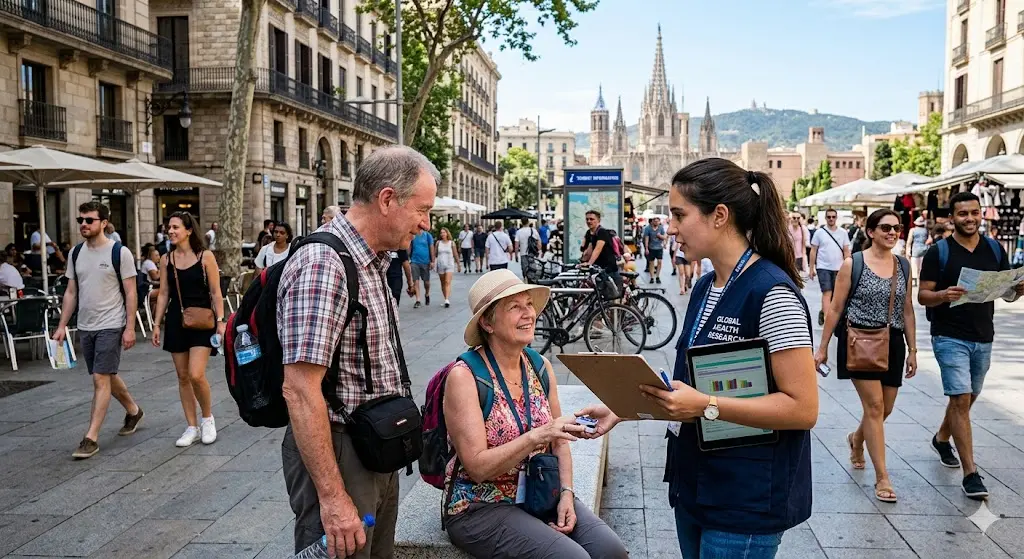
Urban tourism is no longer just about sightseeing or weekend travel. Global health research now shows that well-designed urban tourism can improve mental wellness, social connection, physical activity, and even community resilience. At the same time, overcrowded cities, pollution, and tourism pressure can create health risks if growth isn’t managed carefully.
Global health research on urban tourism and public wellness explores how city travel affects physical health, mental well-being, healthcare systems, public spaces, and local communities. In 2026, researchers are focusing on sustainable tourism, walkable cities, stress reduction, clean transportation, and healthier urban environments for both residents and travelers.
What Is Global Health Research on Urban Tourism and Public Wellness?
Global Health Research on Urban Tourism and Public Wellness: Research that studies how tourism in cities affects the health, happiness, safety, and quality of life of travelers and local populations.
Cities attract millions of tourists every year because they offer culture, food, entertainment, healthcare access, nightlife, history, and business opportunities all in one place. But here’s the thing — researchers are now asking a deeper question: does urban tourism actually improve public wellness, or does it slowly damage it?
In most cases, the answer depends on how cities manage tourism growth.
When urban tourism is planned carefully, it can encourage walking, social interaction, green transportation, and economic development. A city with public parks, cycling lanes, reliable transport, and clean public spaces tends to create healthier experiences for visitors and residents alike.
On the other hand, poorly managed tourism often leads to stress, traffic congestion, rising living costs, noise pollution, and overcrowding. What most people overlook is that public wellness isn’t only about hospitals or healthcare systems. It’s also about whether people feel safe, calm, connected, and physically active in their environment.
Researchers studying urban wellness trends have noticed a major shift since the pandemic years. Travelers now prioritize cleaner cities, wellness-friendly experiences, outdoor activities, and destinations that support mental health rather than nonstop entertainment.
Why Global Health Research on Urban Tourism and Public Wellness Matters in 2026
Urban tourism in 2026 looks very different from what it did a decade ago.
Travelers are more health-conscious. Local governments are under pressure to reduce pollution. Remote workers are blending tourism with long-term stays. And public health experts are increasingly involved in tourism planning.
That’s a huge shift.
Cities are no longer competing only for tourist spending. They’re competing for livability.
In my experience, cities that invest in wellness-focused tourism tend to build stronger long-term economies because people don’t just visit once — they come back repeatedly. Places with clean public transportation, green zones, safe pedestrian streets, and cultural balance often perform better than cities chasing mass tourism numbers alone.
A good example is how several urban destinations redesigned public areas after overcrowding issues became impossible to ignore. Some cities expanded walking-only zones, limited vehicle traffic in tourist districts, and invested heavily in urban green spaces. Those changes didn’t just help tourists. Residents reported lower stress and improved community satisfaction too.
That overlap between tourism development and public health is where current research is heading.
Expert Tip
Cities that prioritize “slow urban tourism” usually see stronger visitor satisfaction. Travelers often remember comfort, accessibility, and emotional experience more than packed attraction schedules.
How Does Urban Tourism Affect Public Wellness?
Urban tourism affects wellness in both direct and indirect ways.
Physically, travelers tend to walk more in cities with reliable transportation and pedestrian-friendly design. Mental wellness also improves when visitors feel socially connected, safe, and engaged in cultural experiences.
Still, there’s another side to this conversation.
Large tourist volumes can increase air pollution, crowding, waste production, and pressure on healthcare services. Residents sometimes experience higher stress levels during peak tourism seasons, especially in neighborhoods that lose affordable housing due to tourism-driven demand.
Here’s the counterintuitive point many reports miss: more tourism doesn’t automatically create happier cities.
Some destinations with fewer tourists actually provide healthier public experiences because they focus on sustainability rather than volume.
That idea is changing how governments approach tourism policy in 2026.
How to Improve Urban Tourism for Better Public Wellness
1. Create Walkable Urban Spaces
Walkability matters more than people think.
Cities designed for pedestrians encourage physical activity naturally. Travelers who walk through urban districts tend to experience less stress and engage more with local communities.
Urban planners now prioritize wider sidewalks, shaded pathways, and reduced traffic congestion in tourism zones.
2. Invest in Green Public Areas
Parks and green spaces have measurable mental health benefits.
A traveler sitting in a public garden after a long flight probably experiences more wellness value than someone rushing through five crowded attractions in one afternoon.
Researchers increasingly connect urban green zones with reduced anxiety, improved mood, and stronger community interaction.
3. Improve Public Transportation
Reliable transport reduces stress for both visitors and residents.
Cities with efficient metro systems, electric buses, and bike-sharing programs often report better tourism satisfaction scores. Cleaner transport systems also improve air quality and reduce noise pollution.
4. Balance Tourism and Residential Life
One mistake cities make is prioritizing tourists while ignoring residents.
That approach rarely works long term.
Healthy tourism ecosystems protect local neighborhoods, support affordable housing, and preserve community identity instead of turning cities into nonstop commercial zones.
5. Support Wellness-Based Tourism Experiences
Urban wellness tourism is growing fast.
Travelers increasingly look for meditation spaces, wellness hotels, healthy food districts, outdoor cultural events, and fitness-friendly experiences while visiting cities.
What’s interesting is that these experiences usually benefit residents too.
Expert Tip
If a city wants stronger tourism growth in the next five years, improving local resident wellness is probably one of the smartest strategies available. Happy residents create better visitor experiences naturally.
Why Mental Health Is Becoming Central to Urban Tourism Research
Mental health is now a major focus in urban tourism studies.
For years, tourism discussions centered mostly on economics. Today, researchers are asking whether urban environments support emotional well-being and psychological recovery.
That shift matters because city travel can be mentally exhausting.
Noise, crowds, digital overload, and transportation stress often affect travelers more than expected. I’ve personally noticed that travelers increasingly value calm public spaces over hyper-commercial tourist attractions. A peaceful riverside walk or a quiet cultural district often leaves a stronger impression than a packed entertainment venue.
Researchers call this the “wellness experience economy.”
Cities adapting to this trend are investing in cleaner environments, wellness events, art-centered public spaces, and healthier food systems.
Oddly enough, some of the best tourism improvements aren’t flashy at all. Better benches, safer lighting, cleaner air, and quieter public areas can dramatically improve how people feel in a city.
What Are the Biggest Public Health Risks Linked to Urban Tourism?
Urban tourism creates opportunities, but it also introduces public health concerns.
Overcrowding remains one of the biggest challenges. Large tourist populations can strain transportation systems, healthcare access, sanitation services, and waste management infrastructure.
Disease transmission is another ongoing concern in densely populated tourism zones. Public health experts continue monitoring how global travel affects outbreaks and emergency preparedness.
Air quality also plays a major role.
Heavy tourism traffic often increases pollution levels, especially in highly concentrated city centers. Poor air quality affects both visitors and residents over time.
Then there’s housing pressure.
Many cities face rising rental prices linked to tourism demand. When local residents feel displaced, public wellness declines regardless of tourism revenue growth.
Expert Tip
The healthiest tourism cities usually maintain a balance between visitor experience and resident quality of life. Once that balance disappears, public dissatisfaction rises quickly.
Real-World Example of Urban Tourism and Wellness Strategy
A realistic example comes from cities that transformed former industrial areas into wellness-friendly tourism districts.
Imagine a waterfront district previously filled with warehouses and traffic congestion. Local authorities redesign the area with bike lanes, public art, open-air markets, walking trails, and green recreational zones.
Tourism increases steadily, but something else happens too.
Residents begin using the same public spaces for exercise, social gatherings, and relaxation. Local businesses benefit from healthier foot traffic rather than overcrowded seasonal tourism spikes.
That kind of mixed-use wellness planning is becoming increasingly common in global urban tourism research.
Common Misconception About Urban Tourism
More Tourists Always Mean Better Economic Health
This belief sounds logical, but it’s often incomplete.
Mass tourism can generate short-term revenue while quietly reducing public wellness over time. Traffic congestion, environmental damage, housing inflation, and stress-related issues sometimes outweigh financial gains if city planning falls behind.
What actually works better in many cases is sustainable urban tourism growth.
Smaller but higher-quality visitor experiences often create stronger economic stability without overwhelming public infrastructure.
That’s the direction many health researchers support heading into 2026.
Expert Tips: What Actually Works in Urban Wellness Tourism
Let me be direct — many tourism campaigns still focus too heavily on attractions and not enough on human experience.
Travelers remember how a city made them feel.
Cities that feel safe, breathable, accessible, and emotionally comfortable usually outperform destinations built purely around entertainment density.
Here’s what seems to work consistently:
Wellness-friendly infrastructure improves tourism satisfaction
Public transportation quality shapes visitor stress levels
Clean public spaces influence mental wellness more than flashy marketing
Local culture matters more than manufactured tourism experiences
Mixed-use neighborhoods create healthier city dynamics
One hot take I’ll stand by: cities obsessed with becoming “tourist capitals” sometimes damage the exact qualities that made them attractive in the first place.
That tension is now a major research topic in public wellness studies.
People Most Asked About Global Health Research on Urban Tourism and Public Wellness
How does urban tourism improve public wellness?
Urban tourism can improve wellness by encouraging physical activity, cultural engagement, social interaction, and economic development. Cities with parks, walkable streets, and strong public transportation usually support healthier experiences for both visitors and residents.
What are the health risks of urban tourism?
Major risks include overcrowding, pollution, stress, rising housing costs, sanitation pressure, and increased demand on healthcare systems. Poor tourism planning can reduce overall community well-being over time.
Why is wellness tourism growing in cities?
Travelers increasingly want healthier experiences rather than nonstop entertainment. Urban wellness tourism combines culture, green spaces, healthy food, fitness activities, and mental relaxation within city environments.
How do cities balance tourism and resident wellness?
Successful cities usually invest in sustainable planning, public transportation, green infrastructure, and residential protections. The goal is to support tourism growth without harming local quality of life.
What role does mental health play in tourism research?
Mental health has become a major focus because travel experiences strongly affect stress levels, emotional recovery, and social well-being. Researchers now study how urban environments influence psychological comfort and happiness.
Can sustainable tourism improve public health?
Yes. Sustainable tourism strategies often reduce pollution, encourage active transportation, support cleaner urban spaces, and strengthen community well-being. Many public health researchers now view sustainability as directly connected to wellness outcomes.
Why are governments investing in wellness-focused tourism?
Governments recognize that healthier cities attract repeat visitors, remote workers, investors, and long-term economic growth. Wellness-centered tourism also improves resident satisfaction and community resilience.
Final Thoughts on Global Health Research on Urban Tourism and Public Wellness
Global health research on urban tourism and public wellness is reshaping how cities think about travel, infrastructure, and public life. Tourism success in 2026 isn’t just about visitor numbers anymore. It’s about creating urban environments where people genuinely feel healthier, calmer, and more connected.
Cities that understand this shift will probably lead the next era of tourism growth. Those that ignore public wellness may struggle with overcrowding, resident dissatisfaction, and declining visitor loyalty over time.
And honestly, that change was overdue.
Our Network site provide related offering Guest Posting Services and Press Release News Submission designed to boost brand visibility, media coverage, and SEO ranking for businesses, agencies, and startups. Platforms like PR Wires and Rank Locally UK help brands secure high authority backlinks, organic traffic, and instant publishing support through professional PR distribution services, digital marketing services, and local SEO services trusted by growing online businesses.