

The Dawn of AI-Driven Software Development
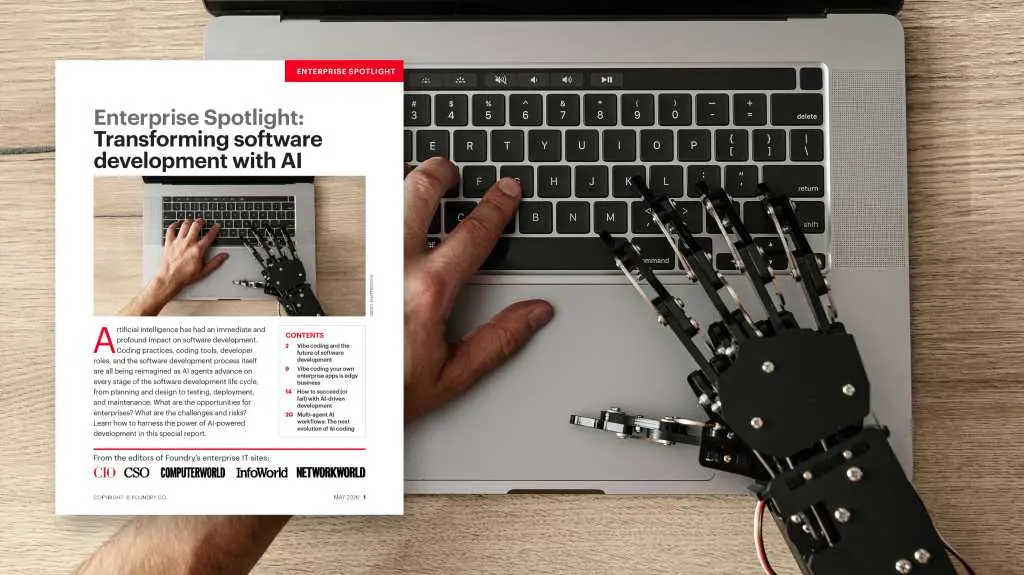
Artificial intelligence has had an immediate and profound impact on software development. Coding practices, coding tools, developer roles, and the software development process itself are all being reimagined as AI agents advance on every stage of the software development life cycle (SDLC), from planning and design to testing, deployment, and maintenance. Enterprises worldwide are racing to integrate these capabilities to accelerate delivery, improve quality, and remain competitive.
AI in Planning and Design
The earliest phases of the SDLC are also being transformed. AI-driven analytics platforms can ingest requirements documents, user feedback, and historical data to generate feature suggestions and architecture blueprints. Tools like those leveraging natural language processing enable product managers to describe a desired functionality in plain English and receive a structured set of user stories, acceptance criteria, and even mockups. Some advanced systems go further, using graph neural networks to recommend optimal microservices breakdowns and API contracts. This shift reduces the time spent on manual specification and allows teams to focus on strategic decisions.
Coding: From Completion to Generation
The most visible change is in the coding phase. AI-powered code assistants such as GitHub Copilot, Amazon CodeWhisperer, and Tabnine have moved beyond simple autocomplete to generating entire functions, classes, and even test suites. These tools are trained on vast corpora of public code and can suggest contextually relevant implementations in real time. Developers report productivity gains of 20% to 50% on routine tasks. Moreover, AI is now assisting with refactoring: suggesting more efficient algorithms, detecting anti-patterns, and automatically applying best practices. Some organizations have adopted AI-assisted code review, where models flag potential bugs, performance bottlenecks, or security vulnerabilities before human reviewers even see the code.
Testing Reinvented by AI
Testing, a historically labor-intensive phase, is being revolutionized. AI can automatically generate unit tests that achieve high code coverage by analyzing the codebase and understanding data flows. Reinforcement learning is used to explore edge cases that human testers might overlook. Tools like Diffblue Cover and Parasoft’s AI-enabled testing suites are becoming standard in CI/CD pipelines. AI also powers visual testing by comparing screenshots of UI components across different states, catching regressions instantly. Furthermore, AI-driven chaos engineering platforms simulate failures and learn the system’s resilience patterns, helping teams build more robust applications.
Deployment and Maintenance: The Intelligent Pipeline
In the deployment and operations phases, AI optimizes build pipelines, predicts resource usage, and automates rollback decisions. Machine learning models analyze historical deployment metrics to recommend the best time for releases, minimizing downtime. AI-based log analysis tools correlate incidents across microservices, root-causing issues faster than manual debugging. Some enterprises use AI to generate runbooks automatically, updating documentation as infrastructure changes. In maintenance, predictive models analyze production telemetry to forecast failures before they occur, allowing teams to proactively patch or scale components.
Reshaping Developer Roles and Skills
As AI takes over more coding and testing tasks, the role of the developer is evolving. Rather than writing every line from scratch, developers are becoming orchestrators: they define higher-level goals, review AI-generated code, and ensure alignment with business requirements. This shift demands new skills: prompt engineering, model evaluation, ethical oversight, and system thinking. Companies are investing in upskilling programs, and many are creating new positions such as AI-assisted developer or AI workflow architect. The stereotype of the solitary coder is being replaced by a collaborative model where humans and AI agents work in tandem.
Challenges and Considerations
Despite the benefits, integrating AI into software development comes with challenges. Code quality and security are paramount: AI models can inadvertently introduce vulnerabilities or rely on outdated libraries. Intellectual property concerns arise when models are trained on code with unclear licensing. Bias in training data can lead to code that favors certain patterns or excludes diverse approaches. Enterprises must implement governance frameworks, regularly audit AI outputs, and establish clear policies regarding acceptable use. Moreover, over-reliance on AI could erode fundamental coding skills, especially among junior developers. Balancing automation with learning opportunities is a critical management task.
Enterprise Adoption Trends
Large enterprises are embedding AI deeply into their development toolchains. However, adoption varies: while 35% of organizations report using AI for code generation, others remain cautious, limiting AI to internal, non-critical projects. The most successful deployments combine AI with strong human oversight. Many companies run pilot programs, measure productivity metrics, and gradually expand usage. Cloud providers like AWS, Azure, and Google Cloud offer integrated AI development services, lowering the barrier to entry. Open-source models, such as CodeLlama and StarCoder, give enterprises control over data privacy, a key concern in regulated industries.
The Future of AI-Enabled Development
Looking ahead, AI agents are expected to become even more autonomous. Future systems may manage entire microservices, from writing code to deploying and self-healing. We will see more specialized models for security auditing, performance optimization, and compliance checking. The boundaries between development, test, and operations will blur further, leading to what some call “AI-native development.” The role of the human developer will shift increasingly toward ethics, creativity, and architectural foresight. The transformation is already underway, and enterprises that embrace it deliberately will be best positioned to lead in the coming era of software creation.
Source: Network World News